
New 12-Month Preclinical Milestone in Regenerative Aesthetics
Conexeu completed a 12-month multi-tissue preclinical program in aesthetics. The program met its pre-defined objectives.


Tissue regeneration requires more than a single component. It requires a foundational structure that more closely reflects the complexity of the body’s own extracellular matrix (ECM).
Our patented CXU ECM is designed to serve as that foundation. Composed of multiple ECM proteins, structural elements and sugars, it is engineered to more closely mimic human tissue ECM than collagen alone.
Following tissue loss or damage, the body’s structural foundation can be diminished or disrupted. CXU is a biomimetic ECM designed to support cell migration, vascularization and tissue integration, creating the conditions for functional tissue restoration.

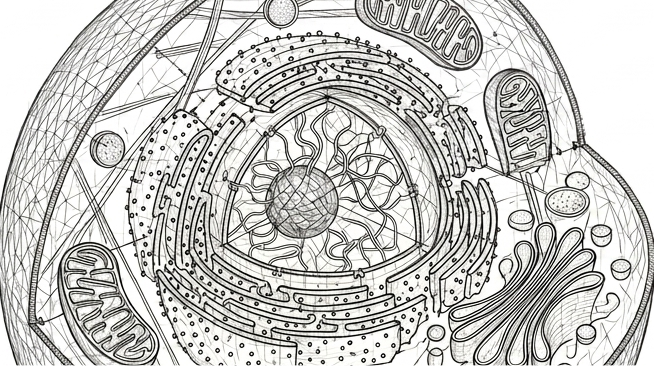
The living builders use the structural support of the ECM to populate and construct new tissue.
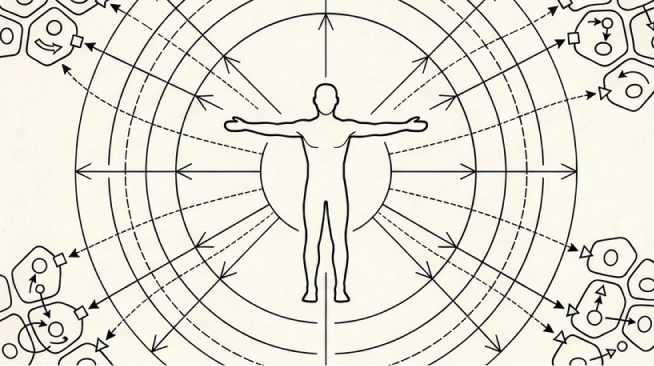
The biological cues that are used for cell to cell communication and direct cellular behavior.
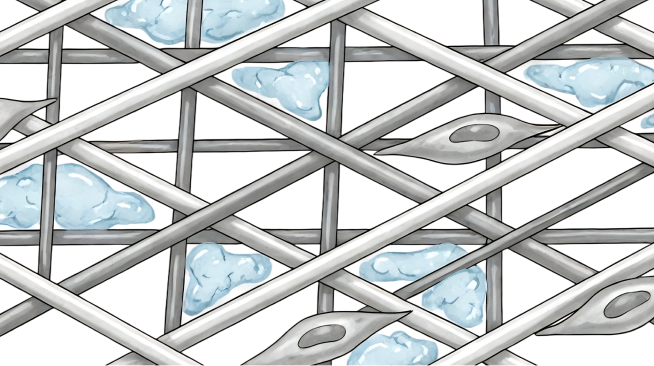
The structural framework that supports and regulates cellular behavior.
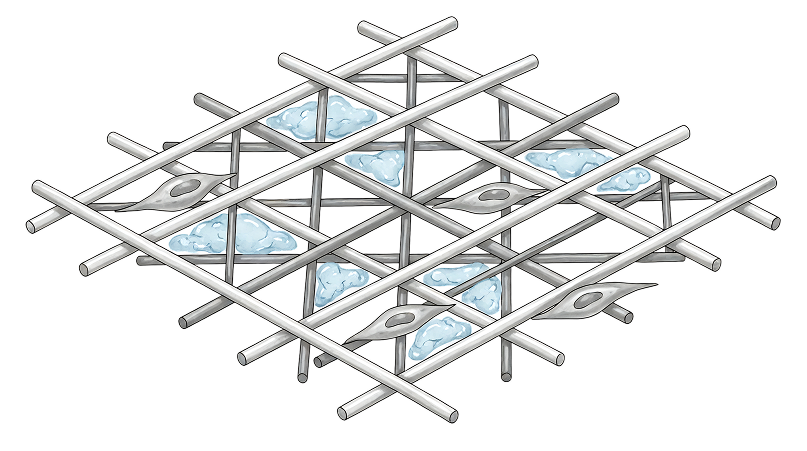
Structured supportive elasticity with organized collagen fibers.
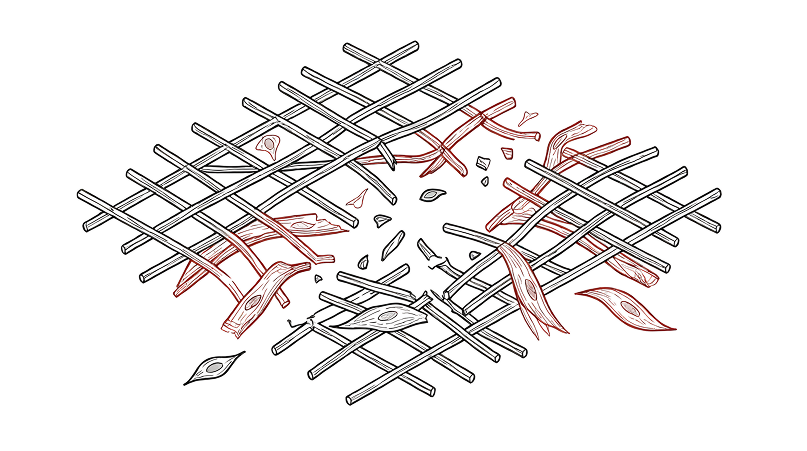
Loss of structural integrity because of tissue disruption and matrix breakdown triggering the wound healing cascade.
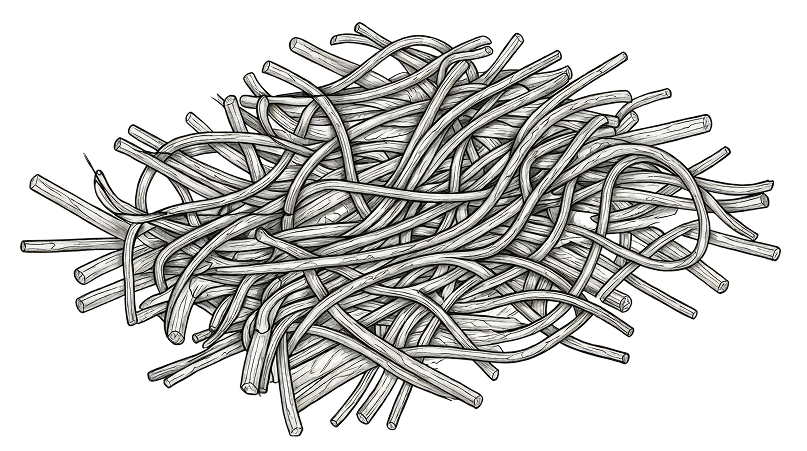
Dense non-functional tissue causes fibrotic overgrowth which create a disorganized ECM deposition.
Trauma, burns, and surgical defects physically destroy the local ECM scaffold, triggering the wound healing cascade and leading to scar formation.
Over time, the body's ability to maintain the ECM can decline, weakening the structural framework, which leads to wrinkles and skin laxity.
Rapid fat volume loss leaves an ECM envelope without underlying structure. The result is laxity and deflation.
How CXU Works
How CXU Works
Starts as a flowable liquid
At room temperature, CXU flows to fill voids where tissue has been lost, maintaining continuous contact for seamless adaptation in the body’s tissue spaces.9
How CXU Works
Set as a gel
After ~10 minutes at 37°C (body temperature), CXU transforms into a gel that provides volume and creates a stable interface.9
How CXU Works
Designed to enable functional tissue regeneration
CXU is being developed to unlock the regenerative potential of native tissues, designed to provide a temporary structural ECM framework that supports the body's own repair and regenerative processes from within.
In preclinical models, investigators report cell presence and infiltration within and at the CXU scaffold-tissue interface, consistent with a scaffold that supports host integration as part of normal tissue repair.3,4,5,7
Published in vivo studies report findings consistent with vascular ingrowth and remodeling in the presence of the scaffold, supporting the concept that CXU may serve as a structural framework allowing for tissue restoration.3,4,7
Preclinical evaluations report a reduced inflammatory profile in the presence of the CXU scaffold, consistent with a material that supports organized repair rather than a prolonged inflammatory phase.3,4,5,7
The scaffold is intended to be gradually resorbed through endogenous processes, leaving behind host tissue rather than a permanent foreign structure.1,2,4,5,7
Conexeu is not simply repairing tissue. We are building a new blueprint for regeneration, one that is disciplined, intentional and grounded in more than a decade of research.
Developed over 10 years at a leading Canadian University.
Conexeu owns the right, title, and interest to the patents worldwide.

Acta Biomaterialia, Advances in Wound Care, Biomedical Materials, Canadian Journal of Diabetes, Experimental Dermatology, Gels, Journal of Burn Care, Tissue Engineering, Transplantation





*All cited studies are preclinical. Findings have not been validated in human clinical trials and are not predictive of clinical outcomes.


